Many businesses believe contract readiness begins when they find the perfect opportunity on SAM.gov. In reality, contract readiness starts much earlier. It begins by making sure your business has the people, processes, financial stability, and operational discipline to successfully perform the work if you win. Companies that understand this distinction are far more likely to pursue the right opportunities and avoid costly mistakes.
What Is Contract Readiness?
Contract readiness is more than meeting the basic requirements to bid on a government contract. Registering in SAM, obtaining a Unique Entity ID (UEI), and creating a capability statement are important steps, but they are only part of the process.
True contract readiness means your business is prepared to deliver on its commitments from the first day of contract performance through successful completion. It requires honest self-assessment, realistic planning, and a clear understanding of your capabilities.
Think of it this way: qualifying to compete and being prepared to perform are two very different things.

Why Contract Readiness Matters
Government agencies invest taxpayer dollars to accomplish important missions. Every contract award involves risk, and contracting officers work hard to reduce that risk by selecting contractors they believe can successfully deliver.
That means they look beyond marketing materials and certifications. They want confidence that a company has the experience, resources, and operational maturity to perform as promised.
Businesses that focus on contract readiness demonstrate reliability before the work even begins.
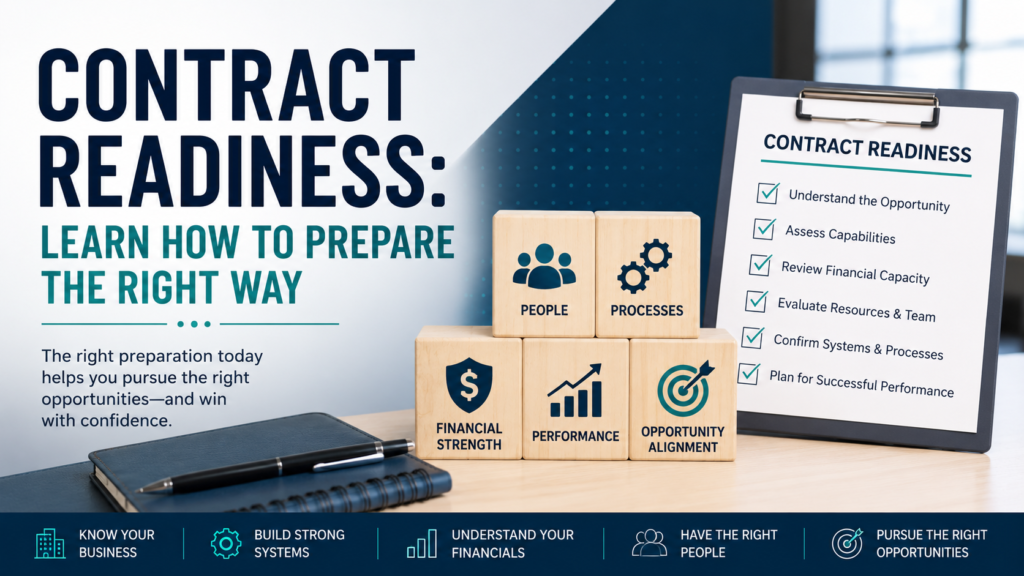
The Five Building Blocks of Contract Readiness
1. Know Your Business
Before pursuing government work, understand your strengths and limitations.
Ask yourself:
- What services do we perform exceptionally well?
- Which industries or agencies are the best fit?
- Where do we have proven experience?
Successful companies build on what they already do well instead of trying to become everything to everyone.
2. Build Strong Internal Systems
Growth without structure creates unnecessary problems.
Reliable financial systems, documented procedures, quality control, and clear communication processes help your business perform consistently as contracts become larger and more complex.
Good systems also make it easier to respond when unexpected challenges arise.
3. Understand Your Financial Capacity
Winning a contract often requires spending money before receiving payment.
Can your business support payroll, materials, subcontractors, insurance, and other operating expenses while waiting for government invoices to be processed?
Contract readiness includes understanding cash flow—not just profitability.
4. Make Sure You Have the Right People
Your employees are one of your greatest competitive advantages.
Consider whether your current team has the experience and capacity to perform the work successfully. If additional hiring is required, have a realistic plan for recruiting, on-boarding, and retaining qualified personnel.
People solve problems. Strong teams reduce risk.
5. Pursue the Right Opportunities
Not every solicitation deserves your attention.
One of the smartest business decisions you can make is choosing not to bid when an opportunity falls outside your capabilities or long-term strategy.
Winning contracts that align with your strengths is far more valuable than chasing every opportunity that appears.
Common Contract Readiness Mistakes
Many businesses spend countless hours preparing proposals without first evaluating whether they are truly ready.
Some of the most common mistakes include:
- Confusing eligibility with readiness.
- Chasing every contract opportunity.
- Overestimating available staff and resources.
- Ignoring cash flow requirements.
- Believing certifications alone create a competitive advantage.
- Focusing more on proposal writing than operational preparation.
These mistakes consume valuable time and often lead to disappointing results.
How to Evaluate Your Contract Readiness
Before investing significant time and money in a proposal, take an honest look at your business.
Ask yourself:
- Are we prepared to perform this work successfully?
- Does this opportunity fit our experience and capabilities?
- Do we have the financial resources to support performance?
- Can our current systems handle additional work?
- Will winning this contract strengthen our business or stretch it beyond its limits?
The answers will often tell you more than the solicitation itself.
Final Thoughts on Contract Readiness
Contract readiness is not about checking boxes or creating impressive marketing materials. It is about building a business that customers—including the federal government—can trust to deliver consistent results.
The strongest contractors are not always the largest companies or the ones submitting the most proposals. They are the businesses that understand their capabilities, prepare deliberately, and pursue opportunities that align with their strengths.
When you make contract readiness your priority, every opportunity becomes easier to evaluate, every proposal becomes more focused, and every contract award has a stronger foundation for success.